
Beyond Image Acquisition: How Machine Vision IPCs Support Automated Industrial Inspection
1. What Is a Machine Vision IPC?
Machine vision has become an important part of industrial automation. Manufacturers use vision systems to inspect product quality, identify defects, measure dimensions, read codes, and verify assembly accuracy. As production lines become faster and inspection tasks more complex, the computing platform behind the vision system plays an increasingly important role.
A Machine Vision IPC (Industrial PC) provides the computing resources and industrial connectivity required to run vision applications. It receives image data from cameras, runs inspection software, processes results, and communicates with other devices, such as PLCs, sensors, motion controllers, and production management systems.
Unlike a standard office computer, an industrial PC is designed for industrial operating environments and continuous workloads. Depending on the model, it may provide multiple Ethernet ports, serial interfaces, and PCIe expansion slots to accommodate different system configurations.
For example, a basic inspection station may use one camera to check product presence, while a more complex system may use several cameras to inspect different surfaces or features simultaneously. These applications have different requirements for computing performance, connectivity, and expansion.
Choosing the right IPC helps manufacturers build a vision system that can process image data efficiently and work reliably with the rest of the production equipment.
2. Machine Vision Applications Across Industries
Machine vision supports different inspection tasks across manufacturing. The computing requirements depend on the production process, the type of product being inspected, and the complexity of the inspection software.
2.1 Electronics Manufacturing
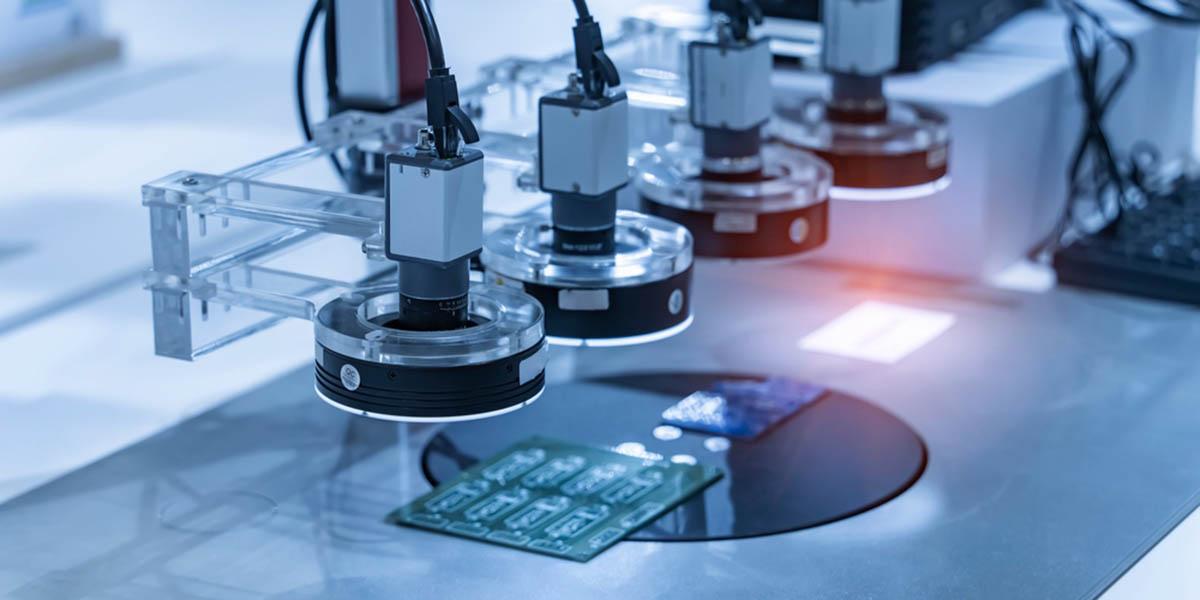
Electronic components and assemblies often require accurate inspection at high production speeds. Machine vision can be used to check component placement, identify missing parts, read product codes, and detect visible surface defects.
Some inspection stations use multiple cameras to examine different areas of a product. In these systems, the IPC must handle incoming image data while running the required inspection software. It may also need to exchange results with the production control system so that defective products can be identified or separated.
When selecting an IPC for electronics inspection, manufacturers should consider the number of cameras, the required inspection speed, and the available network interfaces.
2.2 Photovoltaic and Battery Manufacturing
In photovoltaic and lithium battery production, inspection may be used to identify surface defects, check component positioning, and verify product consistency at different production stages.
These applications can involve continuous production and multiple inspection points. The computing platform must provide sufficient processing capacity and connectivity for the selected cameras and inspection software.
Where additional acquisition or communication cards are required, expansion capability becomes another important consideration. The IPC configuration should be determined by the actual inspection system rather than by processor specifications alone.
2.3 Pharmaceutical and Food Production
Machine vision can support packaging inspection, label verification, code reading, and product appearance checks. These tasks help manufacturers identify visible defects, confirm product information, and improve consistency during production.
For example, a packaging inspection system may need to read a printed code, check label placement, and inspect the appearance of a package. Different cameras or inspection steps may handle different tasks, depending on the equipment design.
The IPC may also communicate inspection results to control equipment or production software. This means that stable processing and suitable industrial interfaces are important parts of the overall system design.
Across these industries, the purpose of a Machine Vision IPC is not simply to collect images. It provides the computing and communication foundation that allows inspection tasks to operate as part of an automated production process.
3. How to Choose an IPC for Machine Vision
Selecting an industrial PC starts with understanding the complete inspection system. Several factors should be evaluated before choosing a model.
Processing Performance
The processor must be capable of running the selected vision software and handling the expected workload. Requirements vary according to image resolution, camera count, inspection algorithms, and production speed.
A system performing basic code reading may have different computing requirements from one running complex defect-detection algorithms. Manufacturers should therefore evaluate the actual software and inspection tasks instead of choosing a processor based on specifications alone.
It is also useful to consider whether the system may need to handle additional inspection tasks in the future. Allowing suitable performance headroom can make later system adjustments easier.
3.1 Network Connectivity and Camera Count
Network interfaces determine how cameras and other devices connect to the IPC. A multi-camera application may require several Ethernet ports, depending on the camera interfaces and overall system architecture.
The number of ports is not the only factor to consider. Camera bandwidth, image resolution, frame rate, and network configuration can all affect data transmission. If several cameras send image data at the same time, the system must be configured to support the required data flow.
Before selecting a model, confirm the number of cameras, their interfaces, the required bandwidth, and the connections needed for other industrial devices.
3.2 PCIe Expansion
Some machine vision systems require additional image acquisition cards, network cards, or other expansion hardware. In these cases, the number and type of available PCIe slots can influence the choice of IPC.
Physical slot size is only part of the selection process. The card's interface requirements, available electrical bandwidth, and compatibility with the system should also be checked.
An IPC with expansion capability may provide more flexibility for applications that require additional hardware. However, not every vision system needs expansion slots. The appropriate configuration depends on the camera architecture and the equipment manufacturer's design.
3.3 Industrial Communication and Software Compatibility
A machine vision system rarely operates independently. It may need to exchange information with PLCs, sensors, motion systems, and factory software.
Ethernet and serial interfaces can support different communication requirements, but the necessary ports depend on the devices being connected. Before purchasing an IPC, system designers should check interface types, operating system requirements, driver availability, and compatibility with the selected vision software.
These checks can help reduce integration difficulties during equipment development and commissioning.
3.4 Operating Environment and Installation
The installation environment also matters. Temperature, dust, vibration, available space, and operating schedules can affect hardware selection.
Manufacturers should confirm that the selected IPC is suitable for the actual working conditions and installation method. They should also consider how the computer will be accessed for maintenance and how its interfaces will connect to the rest of the equipment.
The best IPC is not necessarily the model with the highest specifications. It is the model that meets the application's computing, connectivity, expansion, and environmental requirements.
4. HWAINTEK HC7000 Series for Industrial Machine Vision
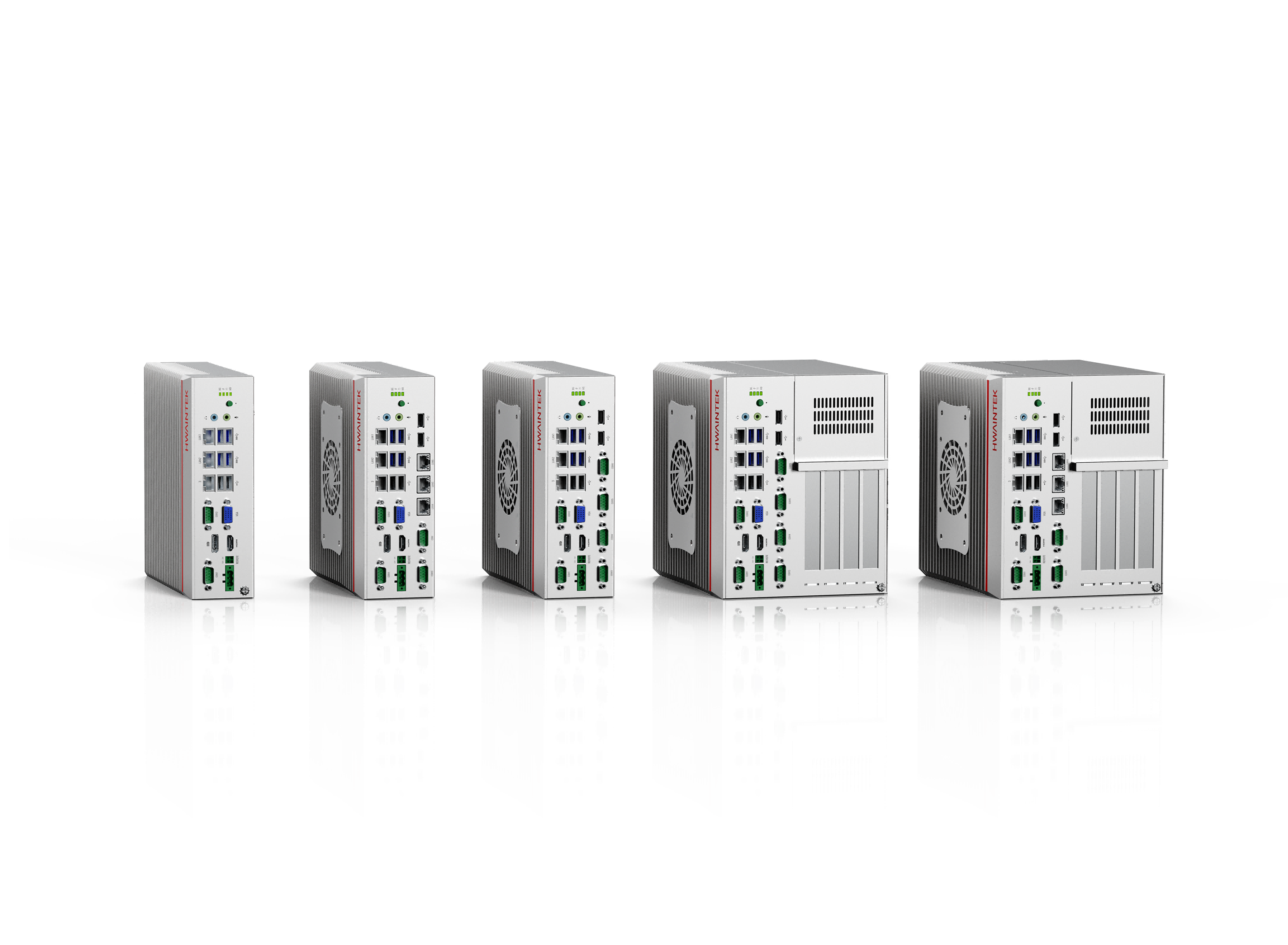
The HWAINTEK HC7000 Series is an industrial computing platform based on Intel® 10th Generation Core™ processors. Different models offer different combinations of network interfaces, serial ports, and expansion capabilities for industrial automation applications.
For machine vision systems, these configuration options can help system integrators select a platform according to camera connectivity, peripheral requirements, and the need for additional expansion cards.
For example, an inspection system using several Gigabit Ethernet cameras should first confirm that the selected model provides enough network interfaces for the planned configuration. If the system requires additional acquisition or communication cards, the available expansion slots and card compatibility must also be checked.
The HC7000 Series includes models with different port configurations, allowing hardware selection to be based on the actual system design. This is important because inspection stations do not all have the same requirements: one may prioritize network connectivity, while another may need additional interfaces for industrial equipment.
When evaluating an HC7000 model, system designers should consider the complete configuration, including the processor, camera connections, expansion requirements, and communication with external devices. Checking these requirements early can help ensure that the selected IPC fits the intended machine vision application.
4.1 HC7000 Series Model Comparison
The following table summarizes selected interface and expansion information. Specifications should be confirmed against the official datasheet for the exact model before publication or system design.
| Model | Gigabit Ethernet | Serial Interfaces | Expansion Slots |
| HC7200 | 3 | 1 × RS-232; 1 × RS-232/422/485 | Refer to official specification |
| HC7210 | 3 | 2 × RS-232; 1 × RS-232/422/485; 3 × RS-232/485 | Refer to official specification |
| HC7220 | 6 | 1 × RS-232; 1 × RS-232/422/485; 2 × RS-232/485 | Refer to official specification |
| HC7214 | 3 | 2 × RS-232; 1 × RS-232/422/485; 3 × RS-232/485 | 1 × PCIe x16; 1 × PCIe x4 (x2 signal); 2 × PCI |
| HC7224 | 6 | 1 × RS-232; 1 × RS-232/422/485; 2 × RS-232/485 | 1 × PCIe x16; 1 × PCIe x4 (x2 signal); 2 × PCI |
Note: Port and slot configurations are model-specific. Please consult the official HWAINTEK product documentation to confirm the final configuration.
5. Building a Machine Vision System Around the Right IPC
An effective machine vision system depends on more than its cameras and inspection algorithms. Computing performance, network connectivity, expansion options, and communication with production equipment all contribute to the overall system design.
Before selecting an IPC, system designers should identify the inspection tasks, camera configuration, expected data workload, required industrial interfaces, and potential expansion needs. These requirements provide a clearer basis for comparing different models.
The HWAINTEK HC7000 Series offers multiple configurations for industrial computing applications. By matching the model to the inspection workload and interface requirements, system integrators can select a platform that fits their equipment design.
The goal is not simply to collect images. It is to provide the computing foundation that allows inspection tasks to become part of a coordinated automated production system.